


NURSING CARE Socks for Diabetic Feet or at Risk – Non-Elastic and Non-Compression
NURSING CARE Socks for Diabetic Feet or at Risk – Non-Elastic and Non-Compression
Couldn't load pickup availability
Nursing Care Diabetic or At-Risk Foot Socks – Protection, Comfort and Softness
The feet of people with diabetes, neuropathy or altered sensation require special care, particularly when choosing socks that minimize pressure and friction on the skin.
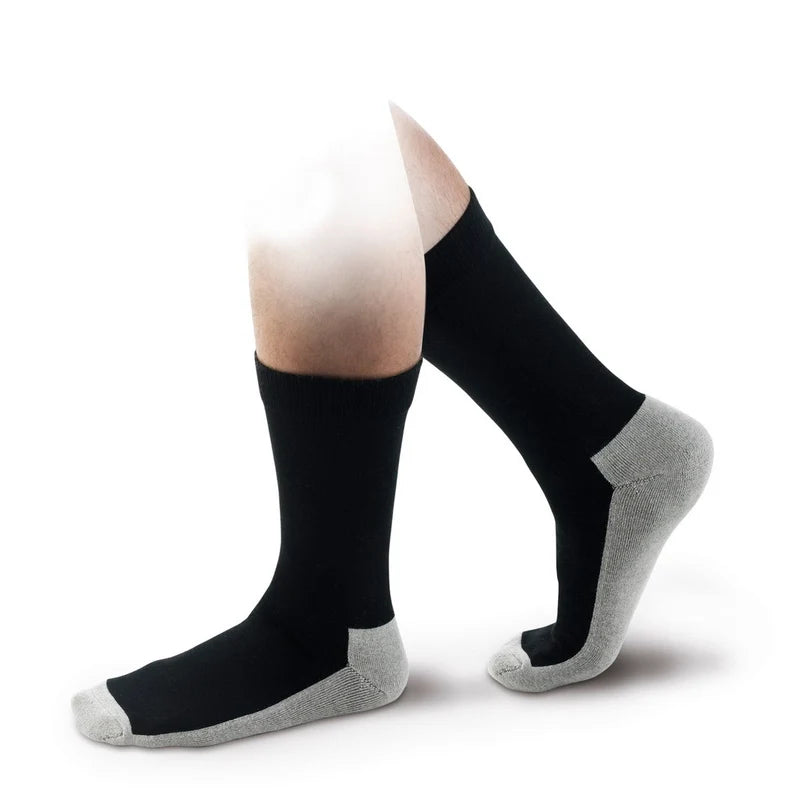
The Nursing Care Diabetic or At-Risk Foot Socks were developed to provide comfortable and safe wear, thanks to the combination of breathable cotton, a non-compression design, flat seams and a padded sole.
Classified by the manufacturer as a Class I Medical Device, they are especially indicated for people with diabetic foot, neuropathic foot or sensitive feet.
Main benefits
-
Elastic-free cuff: prevents excessive tightness and reduces pressure on the leg.
-
Non-compression: provides a gentle fit, suitable for sensitive feet and people who need to avoid constriction.
-
Flat seams at the toes: help minimize friction and pressure points that can cause irritation.
-
Padded sole: offers cushioning and additional comfort while walking.
-
Soft, breathable cotton: helps keep feet comfortable and manage moisture during wear.
-
Light-colored sole: makes it easier to visually identify any blood stains or other signs of injury.
-
Anatomical shape: adapts to the foot, providing comfort during daily activities.
-
Made in Portugal: developed and produced in Portugal by Nursing Care.
Who are they recommended for?
These socks are especially recommended for:
-
People with diabetes: who need extra care in protecting their feet.
-
People with peripheral neuropathy: who have reduced or altered sensation in their feet.
-
People with sensitive feet: who want to avoid pressure, friction and discomfort caused by conventional socks.
-
People who need elastic-free socks: to avoid marks and excessive pressure on the leg.
-
Users seeking greater daily comfort: especially during walks or prolonged periods of wearing footwear.
Why is it important to choose suitable socks for the diabetic foot?
Diabetes can be associated with changes in sensation and blood circulation in the feet, increasing the importance of preventing minor injuries.
Conventional socks, particularly when they have tight elastic, raised seams or uncomfortable fabrics, can create pressure points and friction.
The Nursing Care diabetic socks were designed to minimize these factors through a gentle, non-compression design with flat seams at the toes.
The padded sole provides additional comfort, while the light color makes it easier to visually identify any signs of injury.
Technical specifications
-
Brand: Nursing Care
-
Reference: MN51
-
Product type: Diabetic or at-risk foot socks
-
Classification: Class I Medical Device
-
Main material: Soft, breathable cotton
-
Cuff: Elastic-free and non-compression
-
Seams: Flat in the toe area
-
Sole: Padded and light-colored
-
Shape: Anatomical
-
Use: Unisex
-
Origin: Made in Portugal
-
Washing: Hand or machine wash up to 30 °C, on a delicate cycle
Washing and storage care
To preserve the softness, comfort and durability of the socks:
-
Hand or machine wash on a delicate cycle up to 30 °C.
-
Use neutral detergent.
-
Avoid bleach, whitening agents and fabric softeners.
-
Do not wring or rub vigorously.
-
Air dry naturally in the shade, in a ventilated area.
-
Do not tumble dry or iron.
Nursing Care – Specialized care for sensitive feet
The Nursing Care Diabetic or At-Risk Foot Socks combine essential features for daily comfort: no compression, flat seams, soft materials and padded protection.
At Neovida, you will find comfort and protection solutions for the feet, including diabetic socks, adapted footwear and orthopedic products.
Take care of your feet every day with the comfort and protection of Nursing Care socks.
What are the best socks for people with diabetes?
Socks suitable for people with diabetes should feature soft, breathable materials, seams that minimize friction and a fit that does not cause excessive pressure. The Nursing Care MN51 socks incorporate these features and were developed specifically for the diabetic or at-risk foot.
Why should people with diabetes wear elastic-free socks?
Elastics that are too tight can cause marks, pressure and discomfort in the leg. Elastic-free socks provide a gentler fit and help prevent unnecessary constriction, which is particularly important for people with sensitive feet or circulatory changes.
Are these socks suitable for people with diabetic neuropathy?
Yes. Nursing Care socks are recommended by the manufacturer for neuropathic feet. The flat seams, non-compression cuff and padded sole help reduce friction and pressure points.
What is the advantage of diabetic socks with flat seams?
Flat seams help minimize friction in the toe area, reducing the risk of discomfort and skin irritation, which is particularly important when sensation is reduced.
Why is the sole of the socks light-colored?
The light-colored sole makes it easier to identify any blood stains or other signs of injury, helping to ensure more careful observation of the feet during daily care.
Do these socks apply compression?
No. The Nursing Care MN51 socks feature an elastic-free cuff and a non-compression design, intended to provide comfort without excessively tightening the leg.
Can diabetic foot socks be worn by people who do not have diabetes?
Yes. They can also be worn by people with sensitive feet or those seeking elastic-free socks with flat seams and greater comfort.
Do these socks replace medical compression socks?
No. These socks were developed to provide comfort without compression. They do not replace graduated compression socks when prescribed by a healthcare professional.
How to wash Nursing Care diabetic foot socks?
They can be hand or machine washed on a delicate cycle at a maximum temperature of 30 °C, with neutral detergent. They should be air-dried naturally in the shade.
Are Nursing Care Diabetic Foot Socks made in Portugal?
Yes. Nursing Care MN51 socks are produced in Portugal and are identified by the manufacturer as a Class I Medical Device.

-
Free Shipping
Free shipping to mainland Portugal on orders over €49.99
-

Returns
Free returns within 30 days of purchase
-

Customer Support
Customer support 8 hours/day: Telephone, Whatsapp, Email
-

Secure Payment
100% secure payment methods
